- Ciara Moloney
- Posts
- a 1974 TV movie about alcoholism
a 1974 TV movie about alcoholism
and some print things
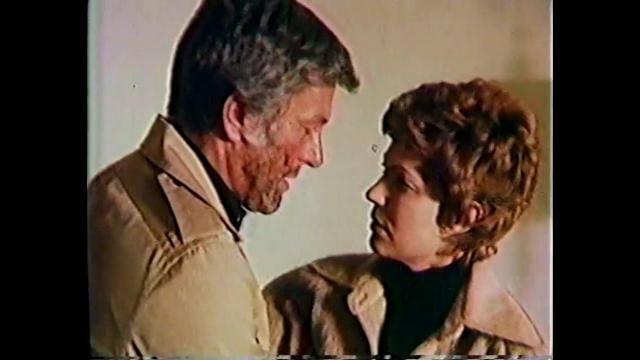
With Dick Van Dyke’s 100th birthday the other day, I wrote about my favourite performance of his for Crooked Marquee: in The Morning After, a TV movie written by Richard Matheson. A preview:
Dick Van Dyke was sent Richard Matheson’s script for The Morning After because the producers “wanted an average-looking man” for the lead role, “to show that alcoholism can be a problem for average people.”
“The first thing I said to them,” Van Dyke recalled, “was ‘How did you know I was an alcoholic?’”
As Dick Van Dyke celebrates his one hundredth birthday, he seems like the kind of all-around entertainer that you half assume grew up on the vaudeville circuit: an extraordinary slapstick artist and a song-and-dance man to boot, and one whose innate affability made him television’s natural everyman – the kind of guy you’d tune in to hang out with each week. Lesser seen are his gifts as a dramatic actor. The shock of his performance in the 1974 TV movie The Morning After remains undiluted because he’s largely maintained the persona that it deconstructs.
Read the whole thing here!

I reviewed the book Single & Psycho: How Pop Culture Created the Unstable Single Woman by Caroline Young for the Winter issue of Cineaste. A preview:
If the essence of a patriarchal society is that women are valued for their roles as Wives and mothers, then the single woman- at least past the age at which her peers marry and have children-is transgressive by nature. Neither daughter nor wife, she is outside of the nuclear family headed by the father. She could easily be a hopeful beacon of an alternate way of being, but most of the time, she has been seen not as a vision of light but as sad, pathetic, and frightening. A bachelor is full of freedom and vitality; eligible for marriage, not rejected by it. A spinster is a joke, a threat, and a warning: the Ghost of Christmas Yet to Come for young women who might imagine they could devote themselves to work or art or pleasure, even for the moment.
In her new book, Caroline Young (author of The It Girls: Glamor, Celebrity, and Scandal, Hitchcock's Heroines, and Crazy Old Ladies: The Story of Hag Horror, among others) traces the history of single women in American and British pop culture, starting with nineteenth-century novels and working forward through film noir, New Hollywood, 1990s erotic thrillers, and contemporary television. Single & Psycho: How Pop Culture Created the Unstable Single Woman is part cultural history, part film criticism, and part memoir, folding in Young's experiences of singledom, abusive relationships, and fertility issues into her analysis of the constantly shifting yet inescapable "crazy single woman" trope.
Get the issue from Cineaste directly here. You may be able to purchase it more locally, or access it through an academic library.
(This is one of the first times — certainly in a professional capacity — I’ve written basically a pan, and I feel nervous about it! But hey, it’s bad book!)

🖤RIP Rob Reiner 🖤
parting recs
As good a time as any to watch The Sure Thing, or Stand By Me, or When Harry Met Sally, or The Princess Bride, or All in the Family, or or or.
Got this email from someone else? Subscribe here